

by Rajat Swroop
Introduction
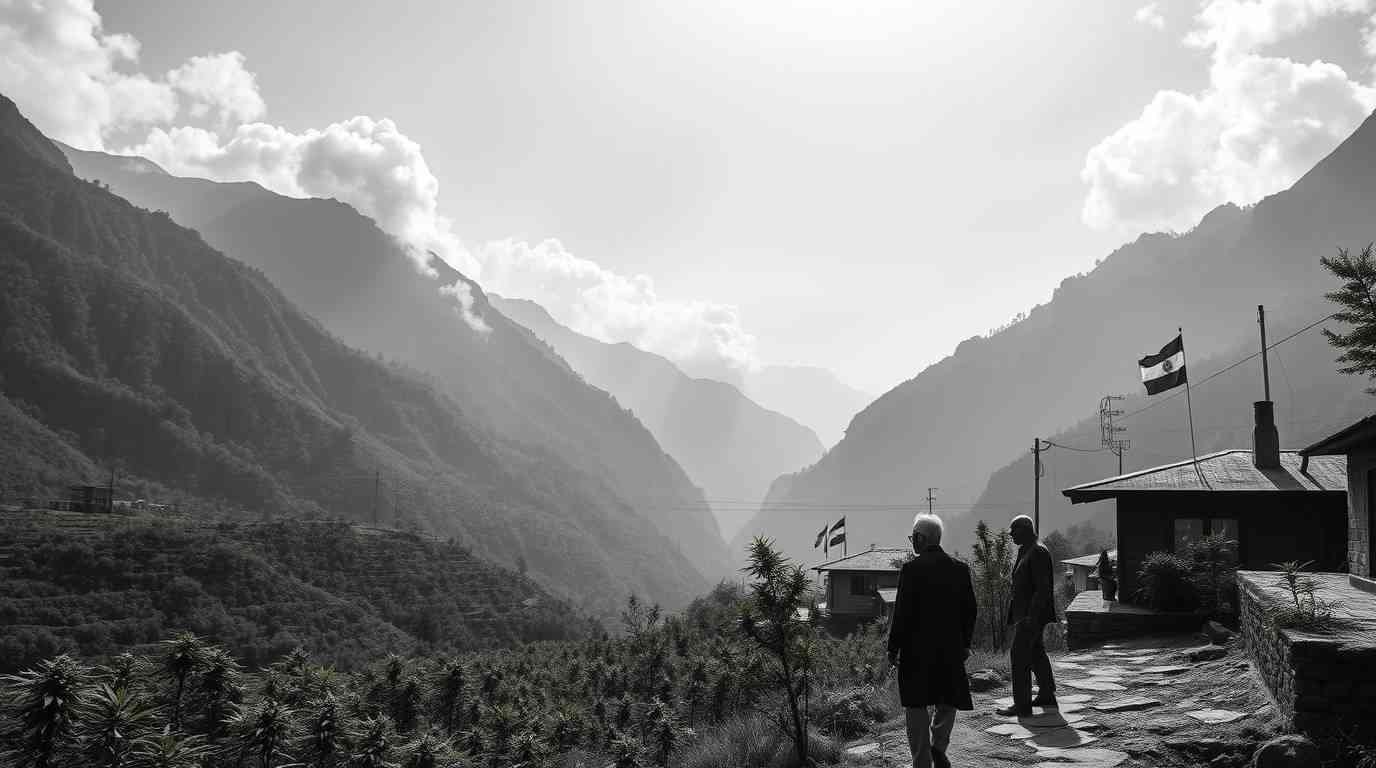
Nestled high in the Parvati Valley of Himachal Pradesh lies Malana, a remote village famed for its unique culture, ancient democratic system—and most controversially, its potent cannabis resin known globally as “Malana Cream.” As the world, particularly the United States, pivots toward cannabis legalization and commercialization, the cultural and political implications for places like Malana have become increasingly complex. This article explores the nuanced intersection of cannabis culture, local Indian traditions, and evolving Indo–US diplomatic and economic relationships.
Malana: A Sacred Village with a Psychedelic Legacy

Malana is not just another Himalayan village—it’s a cultural outlier. Its people, who consider themselves descendants of Alexander the Great’s soldiers, follow their own governance rules and maintain a spiritual connection with the local deity Jamlu Devta. But what has truly put Malana on the global map is its high-quality hashish, known for its creamy texture, aromatic depth, and psychoactive potency.
In India, cannabis has a long spiritual and medicinal history, dating back to Vedic times, where it was associated with Lord Shiva. But modern Indian law treats it harshly. Despite cultural reverence in many regions, the Narcotic Drugs and Psychotropic Substances (NDPS) Act of 1985 criminalized the production, possession, and sale of cannabis resin and flowers, though bhang (a derivative from leaves) remains legal in some states.

The American Influence: Legalization, Capitalism, and Contradictions
Across the globe, particularly in U.S. states like California, Colorado, and Oregon, cannabis has moved from taboo to trendy. The United States, once a major driver of international drug prohibition through diplomatic pressure and treaties, is now leading the charge on decriminalization and commercialization.
American cannabis companies are already generating billions in revenue, and the “green rush” has sparked interest in exotic and legacy strains. “Malana Cream,” despite being illegal for export, has reached near-mythical status in underground cannabis forums, hip-hop lyrics, and counterculture documentaries. American tourists have traveled to Malana, partly in search of spiritual experiences—but also, admittedly, in pursuit of the famous hash.
This rising demand has created a silent tension between traditional preservation and global exploitation. What happens when a spiritual tradition becomes a commodity in a globalized world?
Legal and Diplomatic Dissonance
India’s official stance on cannabis remains conservative, in part due to its commitments under UN drug control treaties. Ironically, these very treaties were largely shaped by U.S. policy in the 20th century. However, India’s growing alliance with the U.S., especially in trade, technology, and strategic diplomacy, has begun to reopen conversations around re-examining cannabis laws.
The U.S., while not yet federally legal, has allowed cannabis to become a key economic sector in many states. India, with its traditional knowledge and bio-diverse cultivation zones, stands at a potential economic turning point. But will India resist American-style commercialization to protect cultural and environmental values—or follow the path of profit?
There’s also a risk of cultural appropriation and intellectual theft. If strains like Malana Cream are hybridized or imitated in foreign labs without due credit or benefit-sharing, it could spark ethical and diplomatic disputes. Indigenous knowledge protection has become an increasingly important issue at international forums, including the World Intellectual Property Organization (WIPO).
The Environmental and Societal Toll
Malana’s fame has not come without a cost. Increased foot traffic from domestic and international tourists has brought waste, erosion, and disruption to a fragile mountain ecosystem. Locals are torn between preserving their heritage and capitalizing on the economic opportunities cannabis tourism offers.
On the ground, there’s also the threat of over-policing. Despite cannabis’s growing global acceptance, Indian farmers and villagers—especially in Himachal and Uttarakhand—face raids, jail time, and asset seizures. The hypocrisy of Americans profiting from cannabis while Indian cultivators are punished for it isn’t lost on observers.
Future Possibilities: Diplomacy, Decriminalization, and Decolonization
As both India and the U.S. evolve in their cannabis policies, there lies a potential for collaborative models rooted in sustainability and respect. Some suggestions include:
- Bilateral cannabis research agreements, focusing on medical uses, cultivation practices, and indigenous plant genetics.
- Fair trade models, where local cultivators in India receive royalties or legal protections for their strains.
- Eco-tourism initiatives that balance cannabis curiosity with responsible, low-impact travel.
- Policy dialogues between Indian and American legislators to share insights on decriminalization, regulation, and rehabilitation.
There’s also an opportunity to decolonize the narrative around cannabis. Instead of importing American commercialization models, India could develop a framework that honors ancient traditions, respects tribal knowledge, and regulates use responsibly—on its own terms.
Conclusion
The tale of Malana Cream is no longer just about a Himalayan hash—it’s a symbol of how culture, law, economics, and diplomacy are colliding in the cannabis era. As the U.S. rebrands cannabis into a billion-dollar industry, India stands at a critical threshold: Will it protect Malana’s legacy, reform its outdated laws, and enter the global conversation with dignity—or allow its spiritual past to be sold without permission?
The future of Indo–US cannabis relations might just depend on how both nations handle the smoke before it clears.