

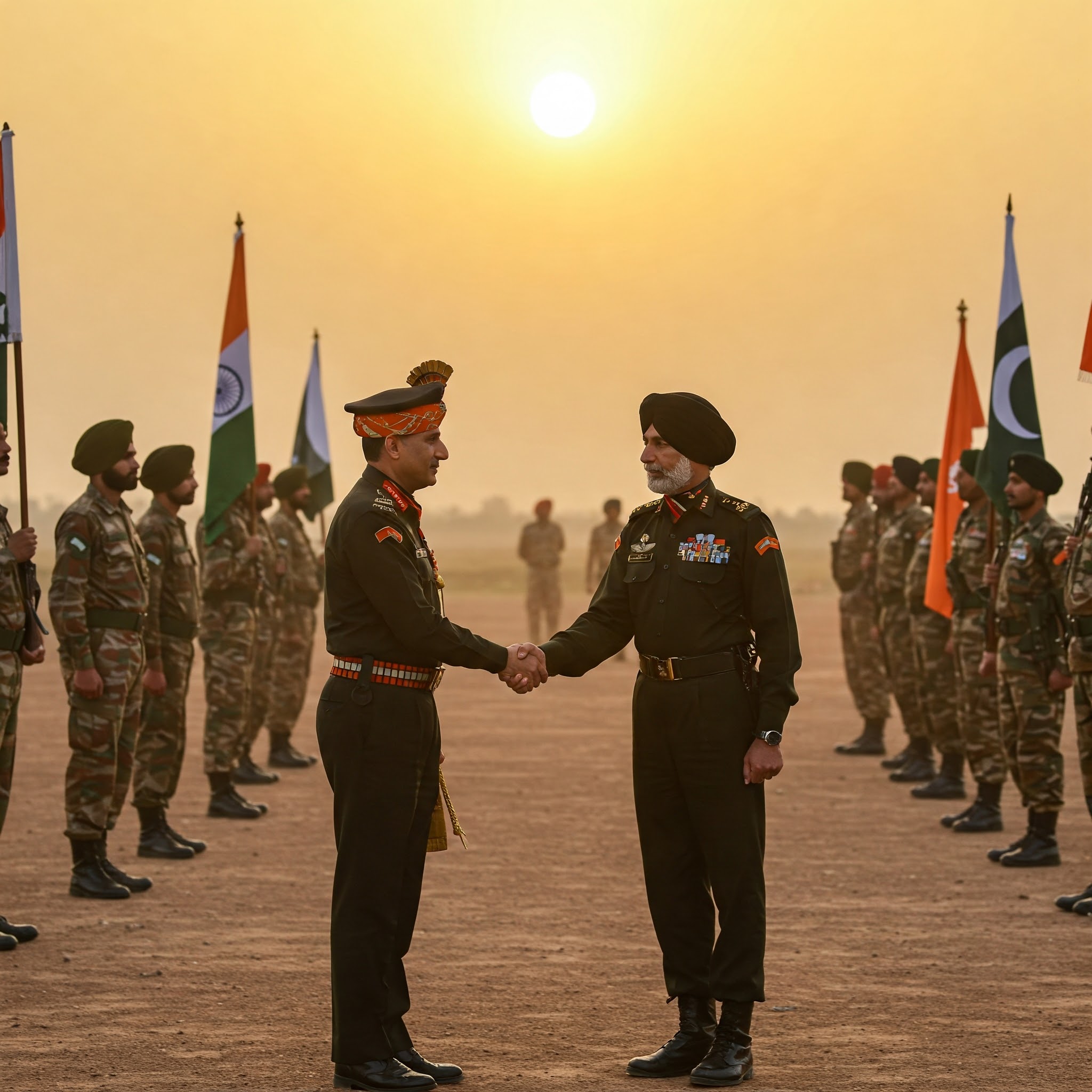
After days of escalating tensions and cross-border hostilities, India and Pakistan have agreed to a ceasefire along the Line of Control (LoC), the International Border, and in the air and sea, effective from 5:00 PM IST today. The announcement comes after a tense week following India’s “Operation Sindoor,” a retaliatory action against alleged terrorist camps inside Pakistani territory in response to the deadly Pahalgam attack on April 22nd.
The ceasefire agreement was confirmed by India’s Foreign Secretary Vikram Misri in a press briefing this evening. According to Misri, the Director General of Military Operations (DGMO) of Pakistan initiated a call to his Indian counterpart earlier today at 3:35 PM IST, leading to a mutual agreement to halt all firing and military action. Instructions have been issued on both sides to implement this understanding with immediate effect.
This development follows a period of intense military activity on both sides. India launched strikes deep inside Pakistan on May 7th, targeting what it claimed were terrorist infrastructure linked to the Pahalgam attack. Pakistan vehemently denied any involvement and retaliated with drone attacks and artillery shelling across multiple locations along the border, including civilian areas. India claimed to have successfully repelled these attacks, even shooting down several drones. The situation led to heightened security measures in border regions, including temporary closure of several airports and a blackout in some areas.
While the immediate cessation of hostilities is a welcome step, the underlying tensions remain. India’s External Affairs Minister S Jaishankar, while confirming the ceasefire, reiterated India’s “firm and uncompromising stance against terrorism in all its forms and manifestations.” This suggests that while military action may be paused, India will continue to hold Pakistan responsible for cross-border terrorism.
Adding an unexpected layer to the developments, the account of a one-time occupant of the White House claimed earlier in the day that the United States had mediated the ceasefire talks. However, Foreign Secretary Misri explicitly stated that the understanding was reached bilaterally between the two countries, with the Pakistani DGMO initiating the contact.
The DGMOs of both nations are scheduled to hold further discussions on May 12th at 12:00 PM IST. These talks will likely be crucial in de-escalating the situation further and potentially addressing the core issues that led to the recent conflict.
The international community will be closely watching whether this ceasefire holds and if it can pave the way for a more stable long-term relationship between the two nuclear-armed neighbors. The economic and social costs of the recent escalation have been significant, and a sustained period of peace is crucial for the stability of the entire South Asian region.