

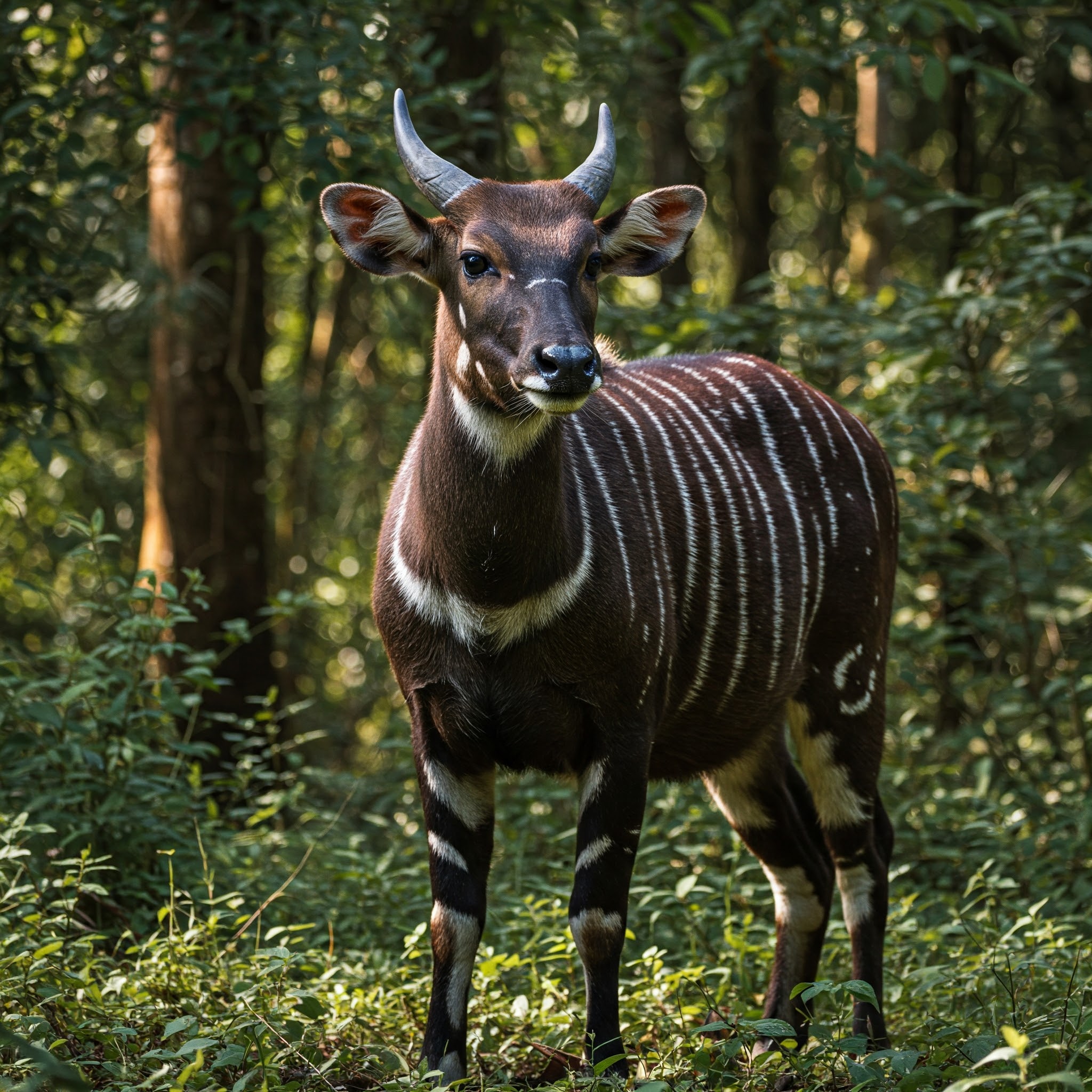
The elusive saola (Pseudoryx nghetinhensis), often dubbed the “Asian unicorn” for its rarity and striking beauty, has long remained a phantom of the Annamite mountain range along the Vietnam-Laos border. Never observed alive by scientists in the wild, knowledge of this critically endangered antelope-like bovine has been pieced together from scant physical evidence and local accounts. Now, a groundbreaking achievement offers a beacon of hope for the species’ survival: an international team of researchers has successfully mapped the complete genome of the saola.
By meticulously analyzing DNA extracted from saola remains found in local communities, the scientists generated complete genomes for 26 individual saolas. This significant breakthrough, recently highlighted by Down To Earth, provides unprecedented insights into the saola’s genetic makeup, population structure, and its deep evolutionary history.
The genomic analysis unearthed a previously unknown genetic division within the saola population, revealing two distinct groups that diverged between 5,000 and 20,000 years ago. The study suggests that expanding human activities during the agricultural transition in the region likely fragmented the saola’s habitat, leading to the isolation and genetic divergence of these two groups.
Adding to the conservation challenges, the research estimated that the total saola population has likely remained below 5,000 individuals for the past 10,000 years, indicating a long-term trend of low numbers. While both populations have experienced genetic loss, the crucial finding is that they have lost different sets of genetic variations. This highlights the necessity of considering both populations in any future conservation strategies to maximize genetic diversity.
The scientists emphasize that while this genomic mapping is a vital step forward, the immediate hurdle remains locating the few remaining saolas in their remote and challenging habitat. The newly acquired genomic information, however, offers promising avenues, potentially enabling the development of more effective environmental DNA sampling techniques to detect these elusive animals.
Ultimately, the researchers believe that establishing a captive breeding program is crucial for the long-term survival of the saola. Their models suggest that bringing together at least a dozen individuals, ideally representing both distinct genetic populations, could offer a viable path to safeguarding the species from extinction. However, the success of this endeavor hinges on the monumental task of finding these incredibly rare creatures in the dense forests of the Annamite mountains.
The mapping of the saola genome represents a significant milestone in the ongoing efforts to protect this extraordinary and enigmatic mammal. It provides a critical scientific foundation, offering new tools and knowledge that could ultimately determine whether the “Asian unicorn” continues to grace the forests of Southeast Asia or fades forever into the realm of myth.